Think of an accountant, and you’ll traditionally picture a man in a suit, but not all accountancy firms are the same. In recent years, we’ve seen gender pay gap reporting and campaigns for flexible working, such as FlexAppeal initiated by Mother Pukka, as well as an increasingly noisy discussion about women empowerment and leadership. It’s all put the topic high on the agenda for the modern-day business.
When it comes to putting women in key roles and keeping them there, however, some firms are way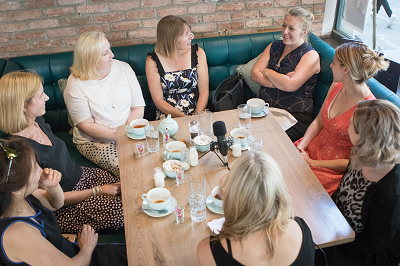
What difference has flexible working made to you?

Kiki Stannard, Partner: I have two children [Esme, 20 and Elliot, 18], both now out of school, 
We had nannies for the first few years. After that, we decided that my husband would give up work and be a full-time carer of the kids. I was quite worried about that at the beginning, because I thought his friends would rib him about it. How wrong I was. Many of them said to him, that’s fantastic, I wish I could do that.


Sungae Han, Payroll Manager: I work from home two days a week. If you have a two or three-hour commute, working from home can save you a lot of time.

I often feel guilty, but hopefully we are giving them the inspiration that they can earn their own money, and can do whatever they like.
Melissa Christopher, Partner: I remember someone telling me years
Kirstie Leadley, Marketing Manager: As a new mum
What additional things do you think should be part of a maternity/paternity/flexi-working policy?
Carolyn: Statutory maternity leave is rubbish.
Gemma: As soon as I fell pregnant with my first [Gemma is mum to Holly, five, and Caspar, three], I had to completely change my financial arrangements so that I could save up to be able to pay the bills while I had maternity leave.
Carolyn: It’s expensive for employers, right? The statutory should be higher, if we’re serious about keeping more women in work.
Sungae: When my daughter Suri was born [she is now five], I wanted to take 52 weeks, and 13 weeks non-paid, but I couldn’t afford to stay away from work. I came back five months later, and F&L allowed me to work 2-3 days a week from home. After nine months, I came back full-time. That period of adjustment was really helpful for me. It gave me time to catch up with things like new regulations coming in.
Kirstie: It’s great to have someone say “that’s ok, take your time.” You don’t need that added pressure. The government has to sort out maternity, big time. But paternity leave is also nuts!
Sungae: There is shared parental leave, but it is so complicated to implement it, from a payroll perspective.
Kiki: It’s not been widely advertised. Most employers don’t actively promote it and there’s not much information on it. You have to have two employers talking together to work out who is going to have what time and what pay.
Gemma: It would be nice if it was normalised. In Scandinavian countries, I think it is more accepted.
How does F&L compare to other firms?

It really proves that providing flexibility allows people to progress, and to fulfil their potential. It’s not about quotas.
Sungae: F&L is very different to other firms, because of the atmosphere. The atmosphere in some places can be cold. When I first came for an interview at F&L, everyone was smiling.
Melissa: F&L is also great at managing expectations of clients. I think a lot of the bigger firms think they have the right to ask employees to work all those hours and get things done when there is no realistic timespan to finish it in. It’s often not necessary – you just have to ask.
What are the main challenges from the employer’s perspective in fitting around working mums – and dads?
Kiki: It is challenging when you have a small team, and one person out of that small team goes on leave. You have to hold that position open, and not know what’s going to happen. It’s not always a financial cost, it’s the disruption.
Melissa: Sometimes it takes some juggling from the rest of the team as well and as someone returning from maternity leave, you don’t want to create resentment from those who are working full time in the office. You’ve got to have the right team mentality, that everyone is pulling together. On the other hand, people often come back from maternity leave and work extra hard, because they know they’ve got limited time and you don’t want to be a burden on anybody else.
Kiki: I think one of the issues which I have seen in some companies is they have a lot of employees working remotely permanently, and all the interaction between people is through video conferencing and so on. The problem is with junior people. How can those people learn, if the individuals who are responsible for them aren’t there? In our environment, the less experienced people pick up a lot of information by osmosis, by sitting next to somebody who knows more than them. So, whilst we’re flexible, and people can work from home if they want to for whatever reason, it is still important that people do come into the office, and that you do work together as a team.
What do you think the impact of initiatives like gender pay gap reporting has been?
Kirstie: I personally find the whole thing misleading. The data has to be like-for-like, exactly the same role in a company, and exactly the same obligations, which isn’t always the case.
Melissa: When it first came out, F&L had four directors who were female. If you’d have looked at ours, our gender pay gap was in favour of women. We had slightly more women in senior roles than we did men. That said, one difference potentially being highlighted by the gender pay gap could be in terms of what we demand in our salaries. Men tend to be a bit more assertive.
“If you’d have looked at ours, our gender pay gap was in favour of women. We had slightly more women in senior roles than we did men.”
Carolyn: I don’t think there is a big gender pay gap in accountancy compared to some sectors. Women take career breaks, and sometimes that does halt your career. Or you make a conscious decision that you don’t want to work five days a week, some of it is a bit incidental – if you are more senior, then you are going to be paid more. It’s not a male-female thing. I think it’s still worth having the information – it’s about what you do with it isn’t it?
Gemma: I think it’s a really important issue, but like you say, it’s over-simplified. Saying “the gender pay gap” and putting a percentage on it doesn’t mean anything. It needs to be comparable, and how on earth could you possibly boil that down to one little soundbite?
Kiki: I do think there has been an issue in the past where, if there has been a male-dominated senior team and they are looking at people to progress and promote, unconscious bias can exist where people promote in their own image. When they look at a candidate who’s male and a candidate who’s female, a male panel might look at the traits that are typically male…they wouldn’t necessarily be able to do the job any better, but what they are thinking is “yes, we could see him on the board with us.” A senior team should have a mix of skills, and a mix of approaches and personalities.
Do women work differently from men in general, or have any specific attributes they are bringing to the table?
Kiki: Women in senior positions are more likely to be collaborative. They are more likely to think about people’s feelings, they are more empathetic.
Gemma: I don’t like the question if I’m honest. If you were to ask the same question about men, what do men bring to the table, it becomes pretty ridiculous. I find it really frustrating, because everybody’s different.
Clear benefits
While everyone we interviewed had their own individual story and experience, the benefits of flexible working are clear to see at Fitzgerald & Law. Gender pay gap reporting may have its controversies, but this is a clear example of how flexible working makes a real difference, allowing people to stay in jobs they love and are talented at. This has benefits for clients and employees alike.
One point which is often raised in the context of flexible working is that clients may expect their team to always be available, and that could be a problem if some work part-time or from home. However, the team at Fitzgerald & Law showed that these expectations can be managed, and being available for people outside of traditional working hours is in fact an advantage when it comes to clients in different time zones.
The ability to work remotely must be balanced however with being in the office, not least in order to train and mentor junior members of the team and establish team spirit. One of the reasons the flexible working model appears to have been so successful here is that it has been adapted according to the different roles, needs and preferences of each employee and their clients, making it truly flexible. Fitzgerald & Law is leading the way in the sector – other firms take note!
- Tell us what you think: Does the industry need to move forward with the help of positive discrimination, or does the F&L example prove that treating people as individuals pays? Have your say in the comments section below.