Governments across Eastern Europe, Eurasia, and the Middle East face a pivotal moment in their economic planning. A growing body of evidence points to a direct link between gender equality and economic prosperity.
Yet, in many countries, female labour force participation remains well below that of men—an untapped reservoir of economic potential.
Enter gender-responsive budgeting (GRB)—a policy framework that embeds gender considerations into fiscal planning. While often viewed as a social initiative, GRB is increasingly recognised as a macro-level economic strategy.
According to a new report by the Association of Chartered Certified Accountants (ACCA), governments that integrate GRB into financial planning can boost GDP, enhance workforce participation, and improve fiscal sustainability.
An Economic Imperative, Not Just a Social Policy
The economic case for greater female participation in the workforce is overwhelming. A landmark study from McKinsey & Company estimates that advancing women’s equality could add $12 trillion to global GDP.

In the European Union, the European Institute for Gender Equality has projected that closing gender gaps in labor participation and earnings could increase GDP per capita by up to 10% by 2050.
The impact is even more pronounced in economies where gender imbalances are particularly stark. IMF research suggests that GDP in Europe and Central Asia could rise by 10% or more if gender inequality were eliminated.
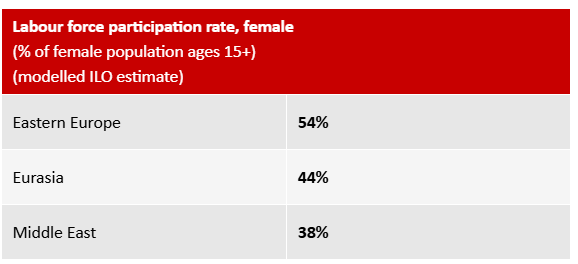
Meanwhile, World Bank data shows that in the Middle East, where female labor force participation is 38%—the lowest globally—economic growth is constrained by an underutilized talent pool.
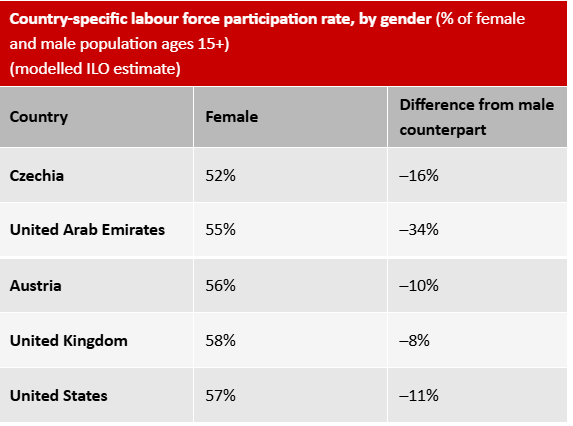
Yet, many government budgets remain gender-blind—failing to account for the structural barriers women face in accessing education, employment, and entrepreneurship.
The Hidden Potential of Gender-Responsive Budgeting
Gender-responsive budgeting does not mean allocating more money to women-specific programs. Rather, it involves analysing how national budgets impact men and women differently, then designing policies that address these disparities.

As Jessica Bingham, Global Sustainability Lead at ACCA, explains:
“Incorporating gender considerations into budgetary processes ensures resources are allocated in a way that meets the diverse needs of all. This not only promotes fairness but lays the foundation for sustainable economic growth and social inclusion.”
The International Labour Organisation (ILO) underscores that GRB is particularly effective in shaping education, healthcare, and childcare policies—critical factors influencing female workforce participation.
For instance, countries with robust childcare support often see higher labour participation rates among women, while those with weak provisions see larger gender gaps in employment.
Lessons from Austria: A Model for Policy Action
While many European nations have made policy commitments to GRB, Austria stands out as a global leader.
The country enshrined GRB in its constitution, ensuring that gender equality is one of nine core criteria for assessing budget proposals.
UN Women describes Austria as a pioneer in this space, highlighting key policies such as:
- Embedding gender equality in the education system
- Funding violence prevention programs, including helplines and shelters
- Promoting women in leadership roles across public and private sectors
This approach has yielded tangible benefits—but challenges remain. Despite Austria’s success, the quality and ambition of GRB objectives vary, and ACCA’s report notes that capacity-building among government officials remains crucial to long-term success.
What Needs to Change?
According to Joe Fitzsimons, Senior Manager for Policy & Insights at ACCA, there are five key steps governments must take to implement GRB effectively:
- Build institutional capacity and awareness—Train public officials in gender-sensitive budgeting.
- Strengthen data collection and analysis—Ensure fiscal policies are backed by disaggregated data on gender disparities.
- Learn from best practices—Benchmark against countries that have successfully integrated GRB, such as Austria.
- Establish inter-ministerial collaboration—Finance ministries must work with labor, education, and social welfare departments.
- Champion gender-balanced leadership—Increase female representation in government and policy-making bodies.
Why Accountants Have a Role to Play
While GRB is often viewed as a government initiative, accountants and financial professionals are integral to its execution.
Their expertise in budgeting, financial analysis, and policy evaluation makes them key stakeholders in tracking and measuring the effectiveness of gender-focused fiscal policies.
“Accountants have a vital role in the application of GRB,” says Fitzsimons. “Governments are increasingly turning to GRB as they pursue more equitable and just societies.”
A Timely Moment for Action
With International Women’s Day approaching on March 8, policymakers have an opportunity to embrace gender-responsive budgeting as a long-term economic strategy, not just a symbolic commitment. The data is clear—more inclusive economies are stronger economies.
As governments across Eastern Europe, Eurasia, and the Middle East consider their fiscal policies, GRB should be at the core of their economic planning. The real question is not whether governments can afford to implement gender-responsive budgeting, but whether they can afford not to.