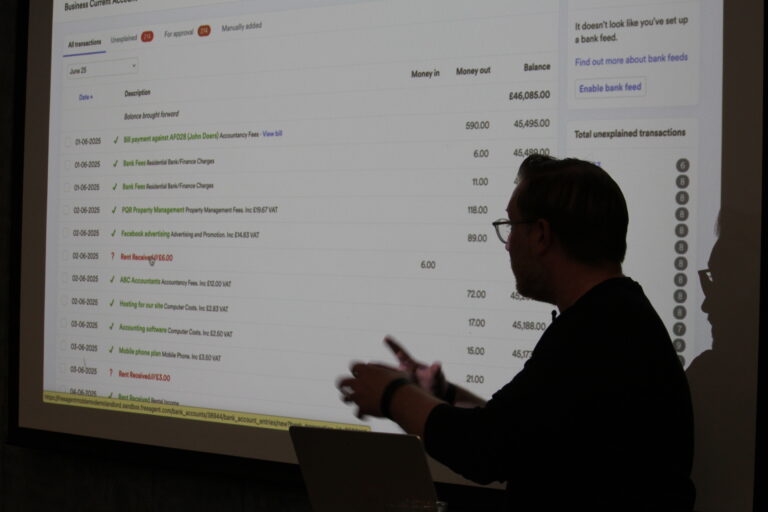
FreeAgent’s central London event on Making Tax Digital (MTD) brought together key players shaping the future of digital tax compliance.
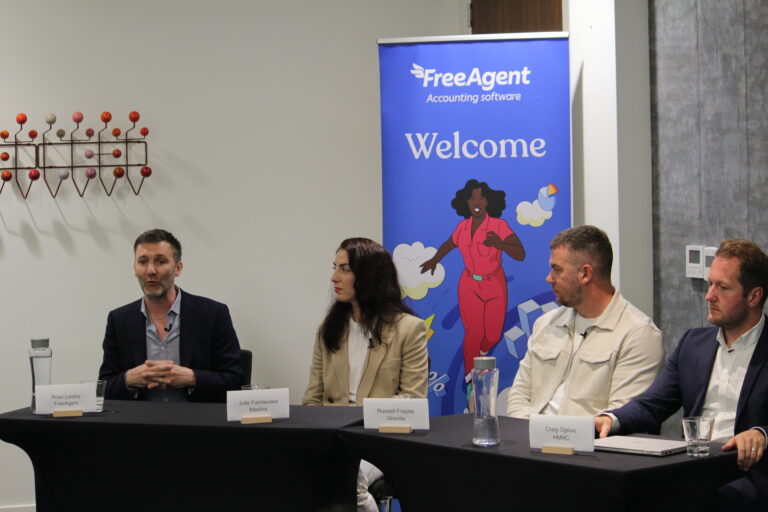
On the panel: James Murray MP, Exchequer Secretary to the Treasury; Craig Ogilvie, MTD Programme Director at HMRC; and FreeAgent’s own CEO Roan Lavery. Alongside them, accountants in the MTD pilot shared hard-earned lessons from the frontlines, including Courtney-Warburton from Gorilla Accounting, Julie Falchevska and Gareth Shaw from Maslins, and Russell Frayne from Gravita.
But away from the spotlight, FreeAgent’s Head of Product Management, Jon Martingale, and Chief Sales Officer, Stewart Hurd, are working on the mechanics that will make-or-break the system for accountants and their clients.
“We’ve got around 100 businesses currently in our testing phase,” Martingale told Accountancy Age.
“It’s enough to give us confidence in our platform, but we need more to stress-test the edges. There are 900,000 taxpayers in the first MTD for ITSA wave. We want to be ready not just for us, but for them.”
Learning from the frontline
Martingale sees the pilot not as a box-ticking exercise, but a live system check. “We have already found issues,” he said. “That’s the point. Testing under real conditions is revealing things we couldn’t catch in development.”
While FreeAgent’s core platform has proven solid, Martingale insists this is no time for complacency. The company’s goal is to uncover edge cases well before 2026.
“We want to be confident that MTD works not just for digital adopters, but for the full spectrum of business users. That only happens when you widen the testing pool.”
The support gap
For Stewart Hurd, the challenge lies not in the technology, but in the people expected to use it.
“The confidence in the tech is high,” he said. “We demoed real submissions to HMRC, and they worked. The gap is in education and engagement.”
Many clients still don’t fully understand MTD, and for some, that is by design.
“Business owners aren’t necessarily meant to grasp every detail,” Hurd explained.
“They lean on their advisers. That’s why it’s essential we equip accountants with information that’s clear, factual and free of jargon.”
Hurd believes accountants will need more support as client questions ramp up.
“They’ll be fielding queries from clients with very different levels of digital maturity. Our job is to make sure the message is consistent and accessible, without turning it into a sales pitch.”
Built-in usability
One advantage FreeAgent holds, Martingale said, is that the platform was designed for small businesses from the outset.

“We’re not bolting MTD onto something built for large enterprises. Our system has always been mobile-friendly and designed with non-specialists in mind.”
That usability is backed up with real-time customer support.
“We still answer calls within five or six rings,” said Hurd. “If we miss one, we call back within an hour. That level of support matters when you’re dealing with small business owners under pressure.”
Pilot pain points
Scaling the pilot remains a priority. The team wants to see the number of testers grow into the hundreds.
“The more users we bring in now, the more confident we’ll be later,” said Martingale. “We want to catch problems early, not when 900,000 businesses go live.”
He acknowledged that signing up testers becomes harder as the 2026 deadline nears.
“By then, there’s less incentive to test something you’ll soon be required to use. That makes the next few months critical.”
Some pain points have already emerged. From input issues to quirks in submission flows, Martingale says HMRC’s willingness to listen has been encouraging.
“It’s not just about identifying bugs. It’s about shaping the user journey with real data.”
Beyond ITSA
While the current focus is on MTD for Income Tax, Martingale and Hurd are already looking ahead.
Their roadmap includes enhanced CIS capabilities and management reporting tools designed to reduce reliance on external platforms.
“Quarterly reporting will become a bigger part of the accountant-client relationship,” Martingale said.
“We’ve introduced new tools that let accountants prepare and share report packs directly through FreeAgent.”
Hurd pointed out that automation for practices is another key focus.
“We’re investing in bulk tools that help accountants complete MTD-related actions more efficiently. Our recent ‘find and fix’ feature is a step in that direction, and more is coming.”
Designing for those left behind
Both Martingale and Hurd stressed the need to consider businesses at the lower end of the digital adoption curve.
“It’s easy to forget that many users aren’t early adopters,” Hurd said.
“They’re successful in their fields but not necessarily confident with digital systems. We can’t leave them behind.”
That’s where support and onboarding come in. “We’re helping accountants by onboarding their clients directly when needed,” Hurd added.
“Webinars, one-to-one sessions, guided training—we’re taking that weight off practices wherever we can.”
The road ahead
With HMRC’s Craig Ogilvie reinforcing that the department remains on track, and James Murray MP offering political reassurance, the panel sent a unified message: MTD is moving forward.
From FreeAgent’s perspective, readiness depends on more than deadlines.
“The challenge isn’t just technological,” said Martingale. “It’s behavioural, educational and collaborative. That’s what we’re building for.”
And while the pilot may still be underway, the underlying message from the first 100 testers is clear: getting MTD right requires real users, real feedback and real urgency.