With less than a week until the 6 April deadline, the “Making Tax Digital” (MTD) for Income Tax revolution is looking less like a streamlined future and more like a looming administrative nightmare for the UK’s self-employed.
While HMRC has long championed the transition as a way to “reduce the tax gap” and “help businesses stay on top of their finances,” new data suggests the message hasn’t just been lost in translation, it’s been completely ignored.
According to a fresh study from Taxfix, surveying 1,000 sole traders earning over £50,000 (the cohort currently in the crosshairs for the April 2026 rollout), the level of unpreparedness is nothing short of staggering.
The Knowledge Gap (Or Rather, Canyon)
If you’ve been spending your client meetings explaining that MTD doesn’t actually mean a 400% tax hike, you’re not alone. The data points to a massive disconnect between Whitehall’s ambitions and the reality on the high street.
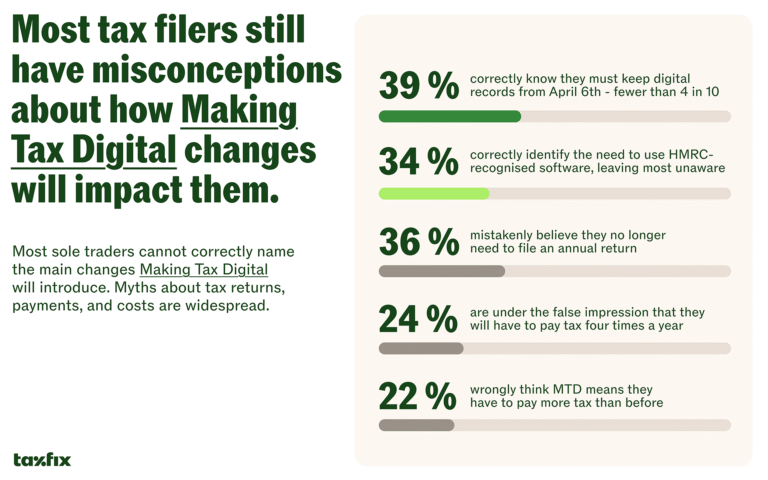
The findings reveal a “perfect storm” of misinformation:
-
Digital Literacy: Only 34% of those affected correctly identify that they must use HMRC-recognised software.
-
The “Scrapped” Return: A worrying 36% believe the annual tax return is being abolished entirely.
-
The Cost of Confusion: Nearly one in four (24%) think they now have to pay their tax bill four times a year, rather than just filing digital updates.
A Failure of Communication?
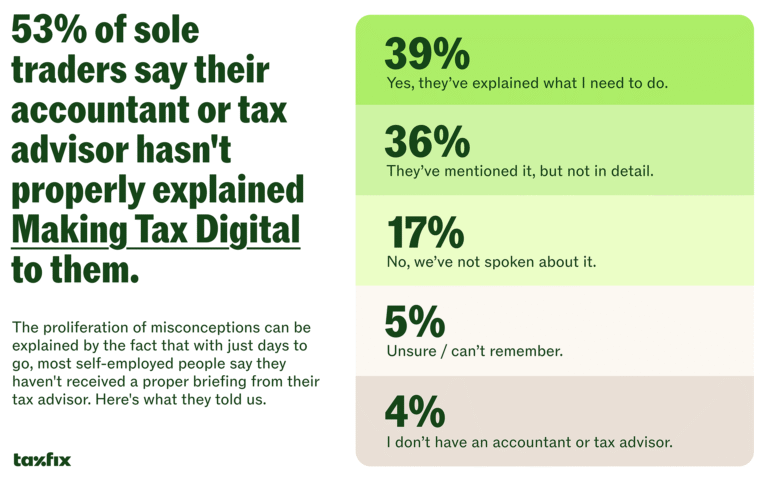
Perhaps most damning for the profession is that 53% of sole traders claim their accountant or tax advisor hasn’t properly explained MTD to them.

While practitioners are often battling “compliance fatigue,” this lack of clarity is having a tangible impact on the economy. 28% of sole traders say MTD will make them more cautious about taking on extra work, and 27% expect to spend significantly more time on admin each month.
For some, the change is a tipping point. The Taxfix study found that 23% are considering moving back into full-time employment just to escape the stress of the new system. When nearly a quarter of your target market considers closing shop because the filing system feels like a “second job,” something has gone fundamentally wrong with the rollout.
Myth vs. Reality: Setting the Record Straight
As an advisor, you are likely the last line of defence against this anxiety. Here is the reality of the system versus the common myths currently circulating on the shop floor:
-
Myth: “Annual tax returns are gone.” The Reality: False. Sole traders still need to submit a final declaration each year. MTD introduces quarterly updates, but these are in addition to, not a replacement for, the annual submission.
-
Myth: “I have to pay tax four times a year.” The Reality: False. Quarterly updates are simple summaries of income and expenses, not full tax returns. They are designed to keep records up to date, but your actual payment deadlines (31 Jan / 31 July) generally remain the same.
-
Myth: “MTD will make me pay more tax.” The Reality: False. MTD doesn’t change the tax rates or how much you owe. It purely changes how you record and report that income, with the aim of reducing manual errors.
-
Myth: “I can keep managing my tax the same way as before.” The Reality: False. If you are above the £50,000 threshold, you must keep digital records and use HMRC-recognised software to submit updates. Paper records or basic spreadsheets without “bridging” software will no longer cut it.
Is the system built for the user?
Oliver Harcourt, Senior Director at Taxfix, has expressed serious concerns about HMRC’s ability to handle the realities of this transition. “HMRC hasn’t even delivered an effective self-assessment system, let alone moving a significant subset of those people to much more complex quarterly reporting,” he notes.
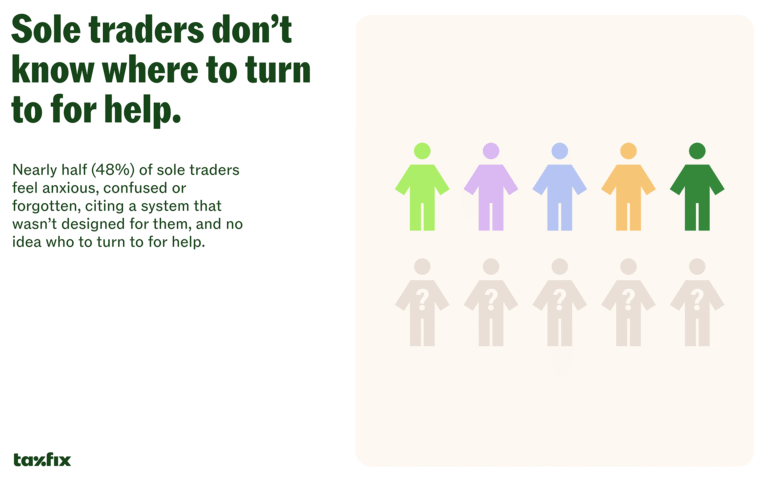
Harcourt argues that the current iteration of MTD benefits HMRC more than the sole trader. With 48% of respondents feeling “anxious, confused or forgotten,” the human cost of digital transformation is becoming impossible to ignore.
As we enter the final countdown, the role of the accountant has shifted from “tax filer” to “navigator.” While platforms like Taxfix are offering tools and even a month of free MTD support to ease the transition, the burden of education falls squarely on the professional community.
The question remains: is the UK’s self-employed workforce being led toward a more efficient future, or simply being pushed into a digital corner?