Pre-budget tax deficits, MTD backlash, and the 22-year retirement trap
From £59bn tax shortfalls and MTD frustration to a 22-year retirement gap and white-hot practice M&A. Here is your midweek briefing on the forces shaping UK accounting.
From £59bn tax shortfalls and MTD frustration to a 22-year retirement gap and white-hot practice M&A. Here is your midweek briefing on the forces shaping UK accounting.
As we move past the midpoint of September 2026, the UK accounting and business landscape is buzzing with policy friction, structural shifts, and strategic firm expansion.
Between the pre-Budget tax pleas hitting the Chancellor’s desk, pension realities reshaping payroll models, and major moves across regional practices, there is plenty to untangle. Here is your midweek round-up on the stories.
With the Chancellor preparing his first Budget amid a reported £59.2bn Corporation Tax deficit, the profession is speaking out with a unified voice: the UK tax landscape is becoming too complex to navigate, let alone collect efficiently.
A landmark pre-Budget survey from ACCA (representing over 100,000 UK members) lays bare a stark collapse in economic confidence:
Confidence Plunge: 65% of accountancy professionals hold a negative outlook on the UK economy, a sharp reversal from the 29% positivity recorded in 2023.
Bureaucratic Burden: 73% of respondents reported a surge in regulatory burdens over the past 12 months.
The MTD Headache: 30% singled out Making Tax Digital (MTD) as the most negative administrative burden relative to its end-user benefit, followed by general reporting duplication (10%) and systemic complexity (8%).
Despite the gloom, there is a silver lining on service levels: dissatisfaction with HMRC’s performance dropped from a crippling 89% in August 2024 to 54% in August 2026.
To tackle the tax gap and relieve systemic friction, Glenn Collins, Head of Technical and Strategic Engagement at ACCA UK, proposes a pragmatic solution: enabling regulated, professionally qualified agents to undertake more routine tax tasks such as altering tax codes directly on behalf of clients.
| Metric / Indicator | Current Figure (2026) | Comparative Baseline |
|---|---|---|
| Economic Sentiment | 65% Negative | 29% Positive (2023) |
| Regulatory Burden Increase | 73% Reporting Surge | Past 12 Months Trajectory |
| MTD Cited as Top Admin Driver | 30% Singled Out | Followed by Duplication (10%) |
| HMRC Dissatisfaction Rate | 54% Dissatisfied | 89% Dissatisfied (August 2024) |
Source: ACCA UK Pre-Budget Member Survey (Sept 2026)
The CIMA Reality Check: Aligning with ACCA’s warning, new research from CIMA reveals a glaring disconnect between Westminster’s pro-growth rhetoric and the reality on the ground. CIMA’s report highlights that 84% of SMEs say government growth announcements rarely translate into tangible support. Furthermore, 25% of SMEs are currently focused purely on survival, while a mere 2% are targeting ambitious growth. Seven in ten SMEs report that the government’s growth plan lacks clarity.
Resources & Whitepapers
Accounting Software The power of customisation in accounting systems
Ahead of Pension Awareness Week, new data from Flagstone points to a brewing workforce challenge that CFOs and finance desks can no longer treat as merely a HR issue.
Flagstone’s analysis reveals that just 14% of UK employees are on track to retire at their desired age with their target income. While the average worker hopes to retire at 61, current savings trajectories mean the average realistic retirement age has drifted to 83 creating an average 22-year gap between expectation and reality.
| Sector | Desired Age | Projected Age | Gap (Years) | % Workers on Track |
|---|---|---|---|---|
| Travel & Transport | 60 | 88 | +28 Years | 4.7% |
| Education & Retail | 61 | 86 | +25 Years | 9.1% |
| Legal Services | 62 | 84 | +22 Years | 12.4% |
| Financial Services | 61 | 77 | +16 Years | 18.5% |
| UK National Average | 61 | 83 | +22 Years | 14.0% |
Source: Flagstone Savings Analysis / Pension Awareness Week Data
When senior employees defer retirement due to pension shortfalls, the financial consequences hit the P&L directly:
Payroll Inflation: Senior staff earning top-of-band salaries and higher employer pension contributions remain on the payroll longer than budgeted.
Succession Bottlenecks: Delayed exits stall promotion pipelines for mid-tier talent, increasing attrition among future leaders.
Actionable Steps: Finance leads should begin stress-testing 3-, 5-, and 10-year payroll forecasts against delayed exit scenarios, while evaluating structured salary sacrifice or phased-retirement models to facilitate smoother transitions.
Following his transition to Prime Minister, Andy Burnham’s administration is generating early optimism among mid-market business leaders, according to a survey of 518 owner-managed businesses by Moore UK.
Positive Outlook: 56% of owner-managed businesses expect Burnham’s tenure to have a positive impact on their business over the next 12 months (compared to 15% negative).
Investment Intentions: 41% of firms say the change in leadership makes them more likely to invest in the coming year.
The Generational & Regional Split: Optimism is highest among younger entrepreneurs. 67% of business leaders under 40 expect a positive impact, and 51% plan to boost investment. Regionally, 73% of Northern businesses favor Burnham’s core policy of regional devolution, compared to 63% in the South.
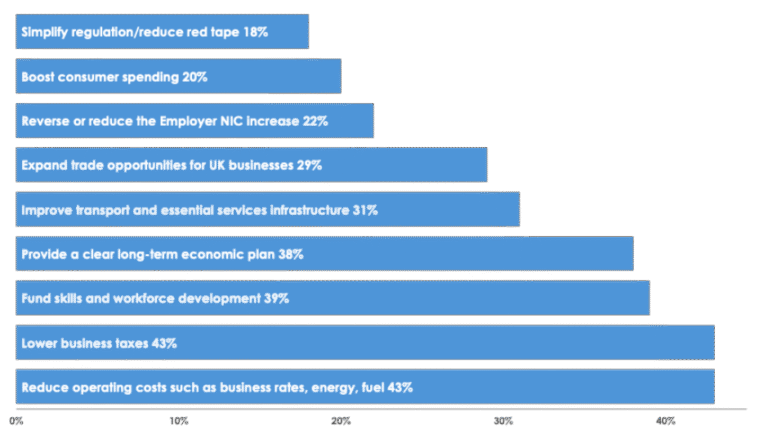
As Mark Lance, CEO of Moore UK, notes, the upcoming October Budget will be the government’s first real test to convert this goodwill into long-term capital investment. Reducing operating costs (43%) and lowering business taxes (43%) top the business community’s wishlist for Burnham’s first 100 days.

It has been a standout week for mid-tier expansion, lateral hires, and independent growth across the UK practice landscape:
Following its integration into Cooper Parry, Fellwood Advisory has poached two senior debt specialists from KPMG:
Saran Lall joins as Director in the Midlands (previously leading KPMG’s national Leveraged Finance Debt Advisory team).
Molly Pearson joins as Associate Director in London, bringing 11 years of KPMG experience with a heavy focus on asset-based lending (ABL) and corporate refinancings.

Tax and advisory firm BKL has appointed Ben Arram as Partner and Head of Regulatory Advisory. Arram joins from Bovill/Ocorian with over 20 years’ experience advising payment service providers (PSPs), e-money institutions (EMIs), and Open Banking firms. The move significantly expands BKL’s capacity to deliver FCA compliance and client money audits for fintechs.
Refusing the private equity route, UK Top 40 firm Streets has expanded its regional footprint through three independently funded acquisitions, adding practices with a combined history of 250+ years:
John Potter & Harrison (Blackpool) – Established in 1892, bringing a 10-strong team serving the Fylde Coast.
HJ Accountants (North Shields) – Strengthening Streets’ coverage across North Tyneside.
Hunter Sinton (Banbridge, Northern Ireland) – Serving the local community since 1946, with over half its client base in agriculture and land-letting.
| Story / Development | Key Metric / Finding | Takeaway |
|---|---|---|
| ACCA Pre-Budget Survey | 65% negative outlook; 73% feel higher admin burden | Lobby for regulated agent powers to handle routine HMRC tasks. |
| Flagstone Pension Study | 22-year gap between desired and realistic retirement age | Model delayed retirement risks into client payroll & succession plans. |
| CIMA SME Survey | 84% of SMEs report no tangible benefit from growth rhetoric | Focus advisory on immediate cost containment and cash runway. |
| Moore UK Leadership Survey | 56% optimistic on Burnham PM tenure; 41% plan investment | Prepare clients for potential autumn fiscal policy & devolution shifts. |
| Practice Expansion (Streets, BKL, CP) | 3 independent acquisitions; senior lateral hires from Big Four | Sustained demand for specialized advisory (Debt, FCA & Regional M&A). |